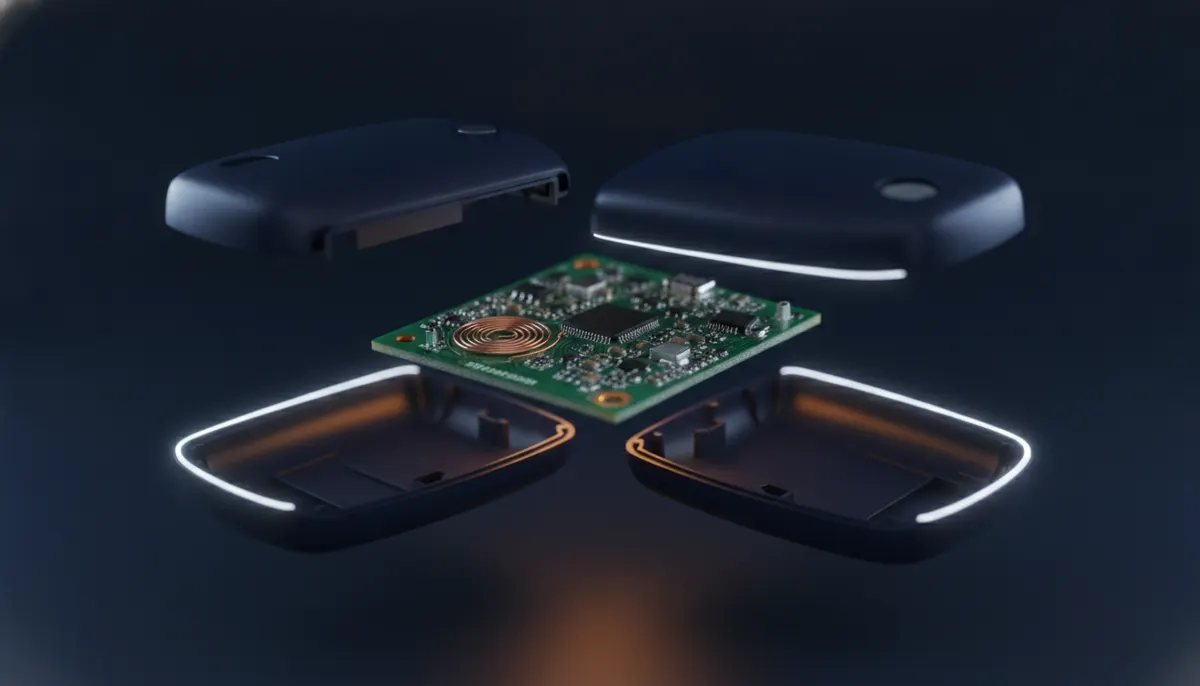
What a relay attack really is
Your keyless fob is constantly listening for a short-range radio question from your car: are you nearby? Stand next to the car and it answers, the doors unlock, and the engine will start. The whole system assumes the key can only answer if it’s genuinely within a couple of metres.
A relay attack breaks that assumption with two devices and two people. One stands near your house holding a device that picks up your key’s signal through the wall — hallway table, coat pocket, kitchen worktop. It relays that signal to a second device held by an accomplice at the car. The car hears what it believes is the key standing beside it, unlocks, and starts. Nothing is broken, no alarm sounds, and the car drives away. There is no clever hack here: the criminals are simply carrying your key’s voice further than it was designed to travel.
Your reg gets you one fixed number — usually back within minutes.
The five things that actually stop it
- Move your keys away from the front of the house. Free, and it defeats most attempts on its own — the relay device has to get close enough to hear the key. Hallway tables and front-door hooks are the worst places in the house for them.
- Use a signal-blocking pouch — and test it. Key in, walk to the car, try the handle. If it opens, that pouch is decoration. A biscuit tin, honestly, often outperforms a cheap pouch.
- Switch the fob off overnight if your car allows it. Many modern keys sleep after being still for a while, and plenty have a button sequence to disable transmission. Check the handbook — two minutes, permanent benefit.
- Add something visible. A steering lock, a driveway post, or simply parking the keyless car in and blocking it with another. Relay theft is opportunist: visible obstacles send them next door.
- Protect the diagnostic port. A different attack plugs into the OBD port to program a fresh key on the spot. An OBD lock or a well-fitted aftermarket immobiliser closes that door.
If it’s already happened
If your car has gone, that’s the police (101, or 999 if it’s in progress) and your insurer. If your keys were taken in a burglary but the car is still there, act today: we cut new keys and delete the old ones from the immobiliser, so the stolen key can no longer start the car. Thieves who took keys know exactly where the car lives, and they come back.
And if you drive a keyless car with only one fob, this is the moment to fix that too — see spare keys and fob replacement.
If your keys are actually gone rather than at risk: the lost keys guide covers next steps, replacement keys covers the job itself, and a spare made today is still the cheapest defence against most of this page.
Keyless security questions, answered straight
Is my keyless car at risk of relay theft?
If it unlocks as you walk up to it without pressing anything, it can potentially be relay-attacked: thieves use two radio devices to extend your key's signal from inside your house to the car on the drive. It's a real risk, but a preventable one — mostly with habits and cheap kit, not expensive gadgets.
Does a signal-blocking pouch actually work?
Yes, when it's a decent one and you use it every time. Test it: put the key in the pouch, walk to the car and try the handle. If the car wakes up, the pouch isn't blocking. A metal tin works on the same principle, and so does keeping keys well away from the front door.
Can I turn off my key's keyless function?
On many cars, yes — some fobs sleep after a period of stillness, and others have a button sequence in the handbook to disable transmission overnight. Worth two minutes with the manual, or ask us next time we're at your vehicle.
What else stops a keyless car being stolen?
Layers a thief can see: a steering wheel lock, a driveway post or a car parked nose-in and blocked in by a second car. An OBD port lock helps against a different attack — plugging into the diagnostic port to program a new key. Thieves generally move to easier targets.
